

Purpose
Silver Cat Technology’s (SCT) current diversity equity and inclusion (DE&I) initiatives have been unsuccessful over the last 12 months. The purpose of this brief is to review current diversity, equity and inclusion practices and identify what the desired future conditions are, how they can be achieved, and lastly, what change strategy SCT must initiate that will allow the organization to achieve long-lasting results.
Background
Umbrella Tech, SCT’s parent company has set aggressive goals for the organization to achieve in 2023. Silver Cat Technology is a global producer of HDMI, ethernet, and networking technology in the industrial automation industry. Silver Cat Technology has been leading the charge on sustainability for the last 50 years and is a leader in innovative practices. However, efforts regarding DE&I have been falling short of the goals set for 2022 and need to be addressed as a top priority for 2023 strategic planning.
Current Situation
In 2021 Umbrella Tech’s board of directors met to discuss diversity equity and inclusion practices in the US. Silver Cat Technology’s corporate office and largest operating plant are both located in York, Pennsylvania, USA. Understanding that “Globalization, labor shortages, digitization, major demographic shifts, and the global pandemic that began in 2020 have redefined the workforce, workplace, and the marketplace”, the board of directors decided on swift action of outsourcing an agency to collect data on the current state of DE&I within SCT (Davis, 2022, p. 31). The leadership team at SCT worked closely with KPMG, the outside agency, to provide data on the current SCT workforce and compare this information to industry benchmarks. KPMG was selected due to their current efforts on DE&I internally. The board of directors found the 2021 US D.E.I. Transparency Report from KPMG enlightening, the report discussed how DE&I was fundamental to “…KPMG’s purpose, Values and strategy” and how unlocking “…the power of the people…” would help to develop “…the best and most diverse talent, providing access to meaningful opportunities and creating an environment in which everyone can thrive and grow personally and professionally” (KPMG, 2021). The report highlighted different dimensions of diversity, by looking at gender, ability status, military status, race, and sexual orientation among their employee population, and celebrated the successes of their commitment to DE&I.
First KPMG and the SCT leadership team conducted a series of surveys to obtain the most up-to-date information on all employees, regarding how employees identified themselves, and the current climate of DE&I within the organization. KPMG suggested that SCT work with Gallup, who is a “…a global analytics and advice firm that helps leaders and organizations solve their most pressing problems,” to analyze current climate of DEI (Gallup, 2022). By utilizing both “qualitative and quantitative” data, “the assessment process focuses on identifying the effectiveness of [the] formal diversity and inclusion efforts and how they support or create barriers to equity within [the] organization” (Davis, 2022, p. 101).
When KPMG evaluated SCT, they found that of the executive leadership team, 83% of the team identified as males, 17% as female, and 100% of the leadership team identified as White. Managers and Supervisors of Silver Cat Technology were 91% White, 9% Hispanic/Latino, and 4% Asian, with 43% of Managers/Supervisors identifying as female, and 61% identifying as male.
For operations, whose positions entail production work within the plant, building, testing, receiving, and shipping products to and from customers and vendors; it was found that 32% identified as male, 65% identified as female, and 4% preferred not to identify. Of this population the employees identified as 2% Hispanic/Latino, 2% Indian, 5% Asian, 9% Black, and 81% White. In production only 19% of employees are people of color.
For engineering, technical support, customer service, sales, and inside sales, only 17% identified as female, while 83% identified as male. Of this population the data breakdown is as follows: 1% Asian, 3% Black, 4% Hispanic/Latino, 17% Indian, and 74% White. Only 25% of employees within these groups are people of color. Lastly, KPMG found that there were no standard compensation bands for each position within SCT, which caused for concern over potential pay inequities.
York County, Pennsylvania, USA, where the office and plant are located is a predominately white, middle-to lower class demographic area. However, Silver Cat Technology is a global organization, and Umbrella Tech is located in the UK. “Globalization allows for business to grow because it provides a platform for companies to offer products in many locales, regions, and countries” (Davis, 2022, p. 33). For Silver Cat Technology, this is a powerful capability, however it does come with its own set of challenges. Understanding and educating employees on the differences between cultures in other parts of the world is paramount to success and is area that has been found to be lacking for SCT. With most of the business occurring in the US, many of the employees who have direct communication with employees located in Brazil have expressed irritation at the perceived lack of communication and business acumen they have received from their overseas colleagues. SCT has been utilizing pulse surveys to obtain feedback from employees for the last 4 years, and this is a common complaint. However, leadership has done little to address employee concerns through the way of educating the broader group on cultural diversity and the dimensions of diversity, specifically in this case geographic location, and work backgrounds.
Similarly, SCT leadership has been hesitant to react on racially charged events over the last few years, including the recent change to the list of US Federal Holidays, in which Juneteenth is now widely celebrated. “Juneteenth (short for “June Nineteenth”) marks the day when federal troops arrived in Galveston, Texas in 1865 to take control of the state and ensure that all enslaved people be freed. (Nix, 2015). Juneteenth is also known as Black Americans Independence Day, and has been acknowledged since 1866, however only in 2021 was it recognized as a Federal Holiday (Roberrson, 2021). Race, and socio-economic class are two dimensions of cultural diversity that impact SCT employees. All SCT’s benefit vendors were closed in observation of Juneteenth, and one other operating company under the Umbrella Tech businesses was also closed. Although the population of employees at SCT is not diverse, the diverse employees’ voices are becoming louder. This can be attributed to a generational shift in the workforce. Major events that have occurred and changed the way people advocate for change has erupted throughout the US; the deaths of George Floyd, Breonna Taylor, and Ahmaud Arbery, sparked protests, and riots in several cities throughout the US and ignited the voices of people traditionally unheard. The volume created by the protests sparked more insight into the Breonna Taylor case in the #SayHerName movement, helped to create Breonna’s Law, in which no knock warrants were abolished in Louisiana (Oppel, 2020). However, despite employees asking for Juneteenth to be a recognized Holiday in the US, leadership has decided against it for the 2022 calendar year.
COVID-19 also highlighted the inequities of the employee base. Many non-essential personnel were asked to work remotely during the height of the pandemic. Non-essential employees are typically salaried employees, whose main function is to work in an office setting. These positions typically make a higher wage then those working in production. Employees who were essential had to continue to work every day and had to balance new hardships including educating children at home, facing limited to no childcare options, all while working longer hours to keep up with demand in products due to supply chain issues. Non-essential employees who had been experiencing socio-economic hardship were reprieved by being able to work at home with their children, saving on expenses such as gas, and childcare.
Desired Future Conditions
Silver Cat Technology could be a more diverse, equitable, and inclusive place to work. If the organization completes the following:
- Make a commitment to DE&I efforts
- Hire a Chief Diversity Officer
- Revise the Mission and Values to include DE&I language
- Outsources/Hire a Compensation Specialist
- Evaluate Gallup DE&I Survey responses with a curious mind
- Focus recruiting efforts to expand to a more diverse pool of candidates
- Anticipate obstacles both internally and externally, and be flexible
- Recognize opportunities that will arise from DE&I efforts
Make a Commitment to DE&I Efforts
This has already begun for the organization; the first step is recognizing that change must be made. Simply by gathering data and asking questions, is a start, the organization must become laser focused on commitment to DE&I, one way to do this is to create a DE&I committee. This committee should be comprised of all levels of the organization and should work with the leadership team to create and publish a transparency report on DE&I efforts. As Janet Stovall said in her TEDTalk, SCT needs to focus on three things, real problems, real numbers, and real consequences (TEDTalk, 2018). Transparency is important to employees, according to Lavoie, its crucial for these four reasons:
- “Better Relationships – Employees don’t just quit their jobs – they quit bosses
- Better Alignment – Transparent leadership results in employees who understand the company vision and how their efforts help achieve company-wide goals
- Better Solutions – When leaders are transparent, problems are solved faster
- Better Engagement – A culture that values transparency in the workplace breeds engaged employees. In fact, Harvard Business Review’s 2013 employee engagement survey revealed that 70 percent of those surveyed say they’re most engaged when senior leadership continually updates and communicates company strategy” (Lavoie, 2015).
Hire a Chief Diversity Officer (CDO)
An even better way to ensure that DE&I efforts do not lose steam – hire someone to take charge and lead the efforts. “A Chief Diversity Officer is an experienced diversity leader to lead and be accountable to an organization on everything equity, diversity, & inclusion. The Chief Diversity Officer is a strategic leader, thought partner and implementer who will connect the dots between diversity and inclusion efforts across the organization” (Man, 2021). “In order to effect real change with DEI in the workplace, the role of the CDEIO [Chief Diversity Equity & Inclusion Officer] must be carefully planned, selected, and supported” (Davis, 2022, p. 89). A benefit of hiring a CDO for Silver Cat Technology now is that there is buy-in from both levels of leadership, the leadership team at SCT and the board of directors for Umbrella Tech. Important things to consider for this process would be to ensure that the CDO is an “influential leader, and champion for people within the organization,” it is also important to remember that this person does not need to a background in human resources, they should however be a verified change agent (Davis, 2022, p. 90). The CDO should be the head of the DE&I committee.
The ideal candidate will be able to “Collaborate with other members of leadership to develop and maintain strategic partnerships with community organizations and other entities as appropriate. Represents the organization with external organizations regarding diversity issues that affect the…community and works to build the organization’s brand and reputation for diversity” (Man, 2021). The CDO should also “develop diversity and inclusion metrics and devises ongoing measures that support the evolution of diversity and inclusion as cultural anchors. Benchmarks and provides avenues for implementation of best-in-class strategies in organization strategies and programs” (Man, 2021). The CDO should report to the President of SCT, and have a dotted line to the board of directors of Umbrella Tech.
Revise the Mission and Values to include DE&I language
As a member of the leadership team for Silver Cat Technology, the CDO should lead a kaizen event to revise the Mission and Values to include DE&I language. Kaizen “means continuing improvement involving everyone – managers and workers alike” (Kaizen Institute, n.d.). Typically, Kaizen events include people from all levels of an organization who collaborate and create change based on a shared problem. In this case, the shared problem is language in the Mission and Values, being updated to include DE&I language, solidifying the organizations commitment to change.
Currently Silver Cat Technology’s Mission is: “We Go Beyond to achieve excellence” (About, n.d.). The Values are:
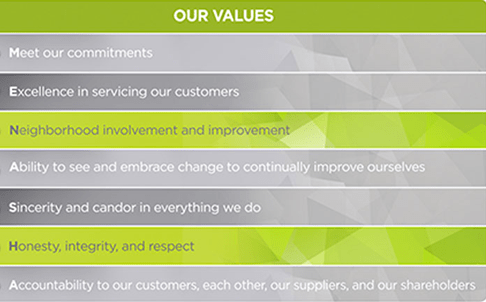
A more inclusive mission statement may sound more like to deliver communication solutions that will connect, educate, and provide information to customers of every ability. The Values can also be simplified to something like:
- Excellence pursued without compromise
- Achievement supported by a climate that celebrates each person’s success
- Diversity of ideas and people
- Engagement with community, through time given and sustainability efforts
- Research and creative activity that foster discovery and contribute to economic prosperity and our quality of life (University of Nebraska–Lincoln, n.d.).
Outsources/Hire a Compensation Specialist
In addition to obtaining results from the Gallup Survey on how current DE&I efforts are within SCT, a review of the compensation structures and breakdowns of where employees fall within pay ranges by position should also be conducted, to identify any gender or racial pay gaps. According to an example by the U.S. Bureau of Labor Statistics from a survey completed throughout 1979-2016, “the gender wage gap varies by race and ethnicity as a percentage of white, non-Hispanic male earnings:
- Hispanic woman: 54.4%
- Black women: 62.5%
- White, non-Hispanic: 79.0%
- Asian women: 84.7%” (Martocchio, 2020).
Ensuring employees are fairly compensated whether it be via comparable pay, or equal pay for equal work, is essential to ensuring an equitable workplace. Also evaluating bonus structures to ensure equity is key. Currently the leadership team is eligible for a 50% annual incentive bonus based on company performance, while hourly production employees are only eligible for a 2.75% annual incentive bonus based on the same factors. Considering that the average leadership team members salary is $100,000 annually, while the average production workers salary is only $32,240 annually, there is a considerable amount of work to do to ensure compensation is equitable among all levels of the organization.
Evaluate Gallup DE&I Survey responses with a curious mind
Survey results can range from the expected to the unexpected, and leaders can take poor results personally and when they do – they are missing the point. It is ideal for the organization to enter the results phase of the survey with an open and curious mind. There are six Cs of inclusive leadership according to Davis: Commitment, Courage, Cognizance of bias, Curiosity, Cultural intelligence, and Collaboration (Davis, 2022, p. 242). Curiosity is having an “…open-mind and a hunger for other perspectives and new experiences to minimize blind-spots and improve decision making” (Davis, 2022, p. 242). By being curious it will allow for leaders to evaluate the results, review the results with their team, and then begin action planning with the team. This focuses DE&I efforts in a conceptually unique way, scaled down from the organization to the group, and further to the individual.
Focus recruiting efforts to expand to a more diverse pool of candidates
“To have an organization that’s diverse, equitable, and inclusive, you need to source and recruit members from underrepresented and marginalized groups” (Davis, 2022, p. 176). Hopefully, with a DE&I committee in place, newly polished Mission, and Values, and ensuring equitable compensation for all employees, and working through action plans on a team-by-team basis – branding SCT as an employer who values diversity will be more achievable. Transparency is key, so items like updating the company “website with messaging that explains your commitment to diversity,” “identifying a diverse slate of interviewers,” and training interviews on the woes of unconscious bias in decision making will be impactful to trying to avoid the pitfalls of biased recruiting. Targeting recruitment efforts in high schools and technical schools in different socio-economic locations will allow for more diverse talent to be reached.
Another way to ensure SCT is hiring diverse talent is to utilize blind resumes, by removing personal identifying information from a resume the recruiter and interview can ensure they are selecting candidates based solely on qualifications. Blind resumes assist in hiring diverse employees on aspects that can be seen with the plain eye, which only accounts for approximately 10% of the diverse traits that make up a person (Davis, 2022, p.15). Additionally for recruitment efforts to be recognized talent management should be tracking DE&I hires. Requesting post-hire information such as race, sexual orientation, gender, military status, and disability status will be critical in tracking success of diverse hires. SCT should be equally concerned with hiring diverse employees of varying ages, abilities, and neurodivergence. Ability meaning “The quality of having the means or skill to do something,” and neurodivergent meaning “having a brain that functions in ways that diverge significantly from the dominant societal standards of “normal.” A person whose neurocognitive functioning diverges from dominant societal norms in multiple ways – for instance, a person who is Autistic, has dyslexia, and has epilepsy – can be described as multiply neurodivergent” (Boston University, n.d.).
Anticipate obstacles both internally and externally, and be flexible
Change is difficult, and scary. Patience, education, and training will all be key in cultivating a diverse and inclusive workplace at Silver Cat Technology. There are several factors which may be internal obstacles.
“The three most commonly cited barriers to effectiveness are:
- A lack of metrics to identify insufficient diversity, equity, and inclusion (35%)
- A lack of understanding of the potential benefits (34%)
- Failure to prioritize at top leadership levels (33%)” (Affirmity, 2022).
Collecting and evaluating data metrics surrounding DE&I efforts will be time consuming. Educating employees about diversity and understanding privilege will be a challenge. DE&I topics can make people uncomfortable and cause them to avoid conversations. Communication, and providing safe spaces for employees to talk and discuss their own insights will be beneficial. Momentum will be an obstacle, if leadership loses focus, or chooses not to hire a Chief Diversity Officer. DE&I efforts are continuous and require constant attention. Evaluating, review and updating metrics, can be cumbersome and will require efforts for all levels of leadership in the organization.
A significant external obstacle that may hinder DE&I efforts would be funding and proper personnel. If DE&I endeavors are not properly budgeted for, they will be less likely to be successful. Hiring a Chief Diversity Officer, obtaining a survey from Gallup, hiring, or outsourcing a compensation specialist, developing, and creating metrics, updating branding, and expanding recruitment efforts will take a large amount of financial resources and time. Not recognizing DE&I efforts may be hindering certain vendors and clients from working with SCT, as the organization may not be an employer of choice.
Recognize opportunities that will arise from DE&I efforts
As a business SCT is in a unique decision to make effective change when it comes to eliminating racism. According to Stovall, 162 million people in America were in the workforce as of 2018, all united in “wanting a paycheck and having to show up to get it”, if an organization was diverse and inclusive then the world outside of work may look and feel more diverse and inclusive (TEDTalk, 2018). “According to a McKinsey & Company report, “Companies in the top-quartile for ethnic/cultural diversity on executive teams were 33% more likely to have industry-leading profitability” (Graham, 2022).
Additionally SCT can expect that with a diverse, equitable, and inclusive environment, employees will be more engaged, exhibit higher productivity, reduce conflict in the workplace, increased trust, reduced stress, and better health mentally and physically, and lastly, happier, and overall healthier employees (Graham, 2022). If employees are happier and healthier, Silver Cat Technology will become an employer of choice, which will positively affect market branding, and will branch out to better relationships with customers, clients, and vendors. DE&I success will also boost innovation and creativity; “If you employ a wide range of people from various backgrounds, ages, levels of education, sex, LGTBQ etc., you’re inviting a wide range of experiences, points of view, beliefs and ideas into the mix” (Davis, 2022, p. 80). Which will increase revenue and profitability of the business, ensuring success and continued growth in the market.
Suggested Organizational Change Strategies
There are a few Organizational Change Models that have been effective for many organizations including but not limited to Kotter’s Change Management Theory model, Lewin’s Change Management Model, and the ADKAR Model.
Kotter’s Change Management Theory model “…is a go-to reference on how to navigate change in business. Kotter outlines an 8-step process for organizational change:
- Create a sense of urgency
- Build a guiding coalition
- Create a strategic vision
- Communicate the vision
- Enable action by removing barriers
- Generate short-term wins
- Sustain acceleration
- Anchor changes in corporate culture” (Altadonna, 2022).
Kotter’s theory was number one on the list of thirteen change models according to Apty, and it is widely known for “establishing a sense of urgency and explaining why change is needed” (Altadonna, 2022). Like the direction of needing to implement DE&I change coming from the board of directors from Umbrella Tech and the Silver Cat Technology leadership team, Kotter’s model focuses on a top-down approach.
Lewin’s Change Management Model is also well known and follows three simple steps, “Unfreeze, Change, Refreeze,” meaning the change occurs in three phases, it sounds simply but the “model focuses on empowering employees, rewarding them for adapting and communicating with them regularly” (Altadonna, 2022).
The ADKAR Model “consists of 5 stages:
- Awareness of the need for change
- Desire to support the change
- Knowledge of how to change
- Ability to demonstrate skills and behavior
- Reinforcement to make the change stick” (Smith, 2019).
This model focuses on being straightforward but is “built around individual change.”
It is suggested that Silver Cat Technology utilizes Kotter’s Change Management Theory model. This model caters to the current culture of SCT, the sense of urgency the organization currently has to facilitate the remaining seven steps of the model, as outlined in the Desired Future Conditions section.
Leading in a diverse workforce will need to eventually become a reality for all businesses, by 2030 the world will be vastly different than the one experienced today. “Artificial intelligence may replace jobs humans once held, employers may recruit global, contract-based workers instead of employing fulltime workers, traditional retirement will peter out as workers continue working as long as they can, and workers will demand more comprehensive benefits” (Davis, 2022, p. 32). Leaders will need to adapt and obtain cultural awareness due to a globally expanding business. Dimensions of diversity such as education, geolocation, religious/spiritual beliefs, and race will be blended due to globalization. Abilities and age will all continue to blend as the workforce grows older and stays in the workforce longer, and neurodiversity becomes a more prevalent disability potentially covered in full by ADAA.
While inevitable, DE&I practices should be embraced and encouraged. Its important to take the opportunity that has been presented to Silver Cat Technology and Umbrella Tech to recognize the sense of urgency to adapt, build a leadership team to create a coalition, create and communicate a strategic vision, enable action to remove the internal and external obstacles to success, celebrate wins as they come, and solidify practices to sustain and anchor change.
References
About. Menasha. (n.d.). Retrieved June 25, 2022, from https://www.menasha.com/Mission
Affirmity. (2022, January 28). 8 of the most common challenges in DE&I Today. Affirmity. Retrieved June 27, 2022, from https://www.affirmity.com/blog/8-most-common-challenges-dei-today/#:~:text=7%29%20A%20Variety%20of%20Factors%20Influence%20the%20Effectiveness,to%20identify%20insufficient%20diversity%2C%20equity%20and%20inclusion%20%2835%25%29
Altadonna, N. (2022, February 19). 13 types of change of management models you should know. Apty. Retrieved June 27, 2022, from https://www.apty.io/blog/organizational-change-management-models
Boston University. (n.d.). Ability and neurodiversity. Ability and Neurodiversity | Diversity & Inclusion. Retrieved June 15, 2022, from https://www.bu.edu/diversity/resources/living-language-guide/ability-and-neurodiversity
Davis, S. (2022). Diversity, Equity, & Inclusion for Dummies. For Dummies®, John Wiley & Sons, Inc.
Gallup, I. (2022, June 1). Who We Are. Gallup.com. Retrieved June 26, 2022, from https://www.gallup.com/corporate/212381/who-we-are.aspx
Graham, N. (2022, April 22). The why behind dei: How diversity, equity, and Inclusion Initiatives Benefit Business. Workhuman Resource Center. Retrieved June 27, 2022, from https://www.workhuman.com/resources/globoforce-blog/the-why-behind-d-i-how-diversity-and-inclusion-initiatives-benefit-business
Kaizen Institute. (n.d.). Definition of kaizen™. What is KAIZEN™. Retrieved June 27, 2022, from https://www.kaizen.com/what-is-kaizen
KPMG. (2021). Diversity, Equity and Inclusion: 2021 US DEI Transparency Report. KPMG. Retrieved June 26, 2022, from https://www.kpmg.us/content/dam/global/pdfs/2021/kpmg-us-2021-dei-report.pdf
Lavoie, A. (2015, April 24). 4 reasons you need to embrace transparency in the workplace. Entrepreneur. Retrieved June 26, 2022, from https://www.entrepreneur.com/article/245461#:~:text=Here%20are%20four%20reasons%20why%20that%20transparency%20and,help%20find%20solutions.%20…%203%204.%20Better%20engagement
Man, J. (2021, April 13). Chief diversity officer is both the hottest and toughest job. Diversity for Social Impact™. Retrieved June 27, 2022, from https://diversity.social/chief-diversity-officer/
Martocchio, J. J. (2020). Strategic compensation: A Human Resources Management Approach (10th ed.). Pearson.
Nix, E. (2015, June 19). What is Juneteenth? History.com. Retrieved June 26, 2022, from https://www.history.com/news/what-is-juneteenth
Oppel, R. A., Taylor, D. B., & Bogel-burroughs, N. (2020, May 30). What to know about Breonna Taylor’s death. The New York Times. Retrieved June 15, 2022, from https://www.nytimes.com/article/breonna-taylor-police.html
Robberson Lentz, S., Lang, S., Woods, J. M., Ward, D. C., Joseph, P. E., & Dawson, A. (2021, April 15). Juneteenth: Black Americans’ true independence day. UT News. Retrieved June 26, 2022, from https://news.utexas.edu/2020/06/18/juneteenth-black-americans-true-independence-day/
Smith, C. (2019, September 29). The Best Organizational Change Models in the Digital age. The Change Management Blog. Retrieved June 27, 2022, from https://change.walkme.com/organizational-change-models/#the-adkar-model
TEDTalk. (2018). How to get serious about racism. YouTube. Retrieved June 26, 2022, from https://www.youtube.com/watch?v=kvdHqS3ryw0.
University of Nebraska–Lincoln. (n.d.). Our core values & beliefs. Our Core Values & Beliefs | Diversity and Inclusion | Nebraska. Retrieved June 27, 2022, from https://diversity.unl.edu/our-core-values-beliefs
 Karla Dentler, Phr, MSOD
Leave a comment